Plato's Unwritten Doctrine:
An Interdisciplinary Reconstruction of the Quadrivium
Expanding Philology through Structural Order
THE STRUCTURAL APPROACH: DISCOVERY TO HYPOTHESIS
The Tübingen School, particularly the pioneering work of Konrad Gaiser, laid the foundation for our understanding of Plato’s inner-Academic teachings. Nevertheless, for sixty years, research has largely remained at this philological threshold. The framework presented here proposes a new, structurally grounded hypothesis regarding the internal architecture of Plato’s unwritten teachings. While the research approach is rooted in strict, verifiable principles of number theory and geometry, its application to the historical and philological corpus of the Early Academy serves as a robust model for academic analysis and discourse.
This project, however, did not begin with the presumptuous ambition of wanting to solve a millennia-old philosophical riddle. Rather, this process was triggered by an accidental discovery: It all began over 20 years ago with a purely playful and experimental exploration of structural symmetries within a unified system, which revealed an exact isomorphism with the fundamental principles of number theory.
Interestingly, this structural research began seventeen years prior to any engagement with Platonic sources. Therefore, its subsequent application to the philological complexities of Plato's Unwritten Doctrines served as a genuine blind test (out-of-sample validation).
The following sections outline the core problematics and central hypotheses of the ongoing research, which is currently being prepared for print publication and secured via Zenodo. To safeguard scientific priority, technical details of the underlying systematic framework, specific references to ancient sources, and the detailed methodology and argumentation are deliberately withheld from this page. They remain strictly reserved for direct academic discourse and the peer-review process.
THE PHILOLOGICAL ANALYSIS AND THE ROLE OF AI
The philological reality of the Platonic and Aristotelian textual transmission is complex: no original manuscripts from the early Academy or the Lyceum exist. The texts we analyze today are the result of a transmission chain characterized by massive physical and linguistic bottlenecks.
The first filter was the media transition from the papyrus scroll to the parchment codex in late antiquity. Since papyrus deteriorates rapidly in the Mediterranean climate, durable parchment provided a salvific, yet exceedingly expensive, alternative. This necessitated strict selection: only texts of the highest priority were copied, inevitably resulting in significant information loss.
Another factor of loss was the creation of so-called palimpsests. Driven by sheer economic necessity in medieval monasteries, invaluable parchment was frequently recycled. Older ancient texts were washed or scraped off to reuse the material for new writings. Textual lacunae and the destruction of ancient sources were the inevitable consequences.
A severe linguistic hurdle arose with the metacharacterismos in the 9th century. During the transcription of ancient majuscule text lacking word spacing (scriptura continua) into medieval minuscule, scholars often had to determine where one word ended and the next began. Particularly with ambiguous terms at the intersection of mathematics and philosophy, this unstructured ancient script inevitably led to semantic shifts.
For Aristotle, whose writings constitute a central external source for Plato's doctrine, the textual transmission was equally precarious. Following his death, his manuscripts languished in poor conditions for centuries before being edited. During the Middle Ages, these texts additionally passed through the Syriac-Arabic translation movement. Ancient concepts had to be translated via Syriac into Arabic and later into Latin—thus traversing entirely distinct language families and grammatical structures.
In the 19th century, this already fragile textual foundation encountered translators such as Friedrich Schleiermacher and Franz Susemihl, who were frequently critical or dismissive of the thesis of a systematic "unwritten doctrine." When confronted with ambiguous passages, they often opted for fluent readability over the exact, albeit sometimes cumbersome, literal wording. Consequently, precise geometric and combinatorial terminology was unintentionally smoothed over and translated into metaphysical concepts.
The Loss of the Inner Doctrine
All these challenges, however, primarily concern Plato's publicly accessible dialogues and the writings of Aristotle. The Academy’s internal working documents regarding the unwritten doctrine were subjected to far more drastic losses. By the end of Xenocrates' scholarchate at the latest, internal academic interest in strict mathematical ontology had waned. It is highly probable that these highly specialized diagrammatic records remained as unique copies behind the walls of the Academy and rarely circulated externally, as any precise reproduction would have required immense expertise, diligence, and specific interest. The destruction of the Academy by Sulla's troops in 86 BC therefore most likely marked the inevitable end of these physical documents. Even if isolated remnants survived, the mathematical foundation required to reconstruct them was largely absent in later epochs. The intellectual legacy splintered: Neoplatonism increasingly transformed the ontology into religious esotericism, while the early structural-scientific approaches evolved into isolated, pragmatic disciplines such as Euclidean geometry.
Conclusion
The history of textual transmission is so complex, fragmented, and punctuated by historical ruptures that it is virtually impossible to form a definitive, purely philological judgment on every ancient term. If the texts have become a patchwork, only the unchanging logic of number theory and symmetry can make the original visual framework of relationships within the ancient Quadrivium visible again. This requires a systematic framework that substantiates the broadest possible spectrum of all relevant characteristics of Pythagorean and Platonic philosophy while simultaneously resolving as many aporias as possible.
AI as a Semantic Scanner, Not an Architect
Although Plato's original manuscripts are irrevocably lost, this research utilizes Artificial Intelligence (Large Language Models) as an assistive tool to at least trace the surviving Greek texts of the copyists back to their original, unembellished root meanings. To be clear:
The foundational structural matrix was not generated by an AI. It is the result of human, highly visual pattern recognition over two decades.
Instead, AI is employed here merely as a strict, unbiased "semantic scanner." Guided methodically by the researcher, it helps to bypass centuries of literary smoothing and uncovers the raw, structural, and geometric definitions of the ancient Greek vocabulary directly from the established critical editions (such as Burnet or Ross). The ultimate proof of this approach, therefore, does not rely on isolated AI-based vocabulary analysis, but on the fact that a independently discovered systematic elevates the systemic coherence of the Platonism to a new level.
Primary Source Editions: To ensure utmost philological transparency, all semantic analyses are strictly based on the internationally recognized academic gold standards for ancient Greek texts: Plato (Platonis Opera, ed. John Burnet, Oxford Classical Texts), Aristotle (e.g., Aristotelis Metaphysica, ed. W. D. Ross, Oxford), and the Pre-Socratics (Die Fragmente der Vorsokratiker, ed. Hermann Diels & Walther Kranz).
The Pre-Prints: Hypotheses & Publications
Archived research establishing the structural foundation.
To ensure the integrity of the discovery and establish permanent timestamps, some hypotheses of this project have been archived at Zenodo (CERN Data Center).
(Note: The files are currently restricted to safeguard intellectual property before the monograph release, but metadata and timestamps are public.)
PAPER 1: ONTOLOGY & THE DIVIDED LINE
Plato's three analogies (Sun, Line, Cave) in the Republic imply a unified system, yet its structural foundation remains a central aporia. This research postulates a generative arithmetical framework that, acting as an "upper octave," illuminates the proportional logic of the Divided Line. It maps the pillars of Platonic doctrine, starting at the top with the highest Principle (analogous to the Sun) and ending at the bottom with the Ideas. Accordingly, this foundational structure serves as a heuristic analogue to the "lower octave"—represented by the Divided Line. This Line connects seamlessly to the bottom of the framework, as it famously begins at its own top with the Ideas. The lower end of the Line, in turn, points toward the realm of shadows, as described in the allegory of the Cave.
This hypothesis is further substantiated by detailed structural clues that correspond precisely to the sequence of stages described in the Republic. For the comprehensive derivation and exact textual mapping, please refer to the accompanying paper.

PAPER 2: THE METAPHOR OF WEAVING AND RELATIONAL LOGIC
Applying the binary mechanics of warp and weft as a heuristic model to a discrete combinatory foundation reveals a striking isomorphism: Plato's concepts of conceptual division (Diairesis) and subsequent intertwining (Symplokē) in the Statesman and Sophist exhibit precise correlates in number theory, geometry, and group theory. The metaphor of weaving can thus be read as a verbal description of a unifying, dyadic operational logic.
This independently developed perspective converges strikingly with the pioneering research of Dr. Ellen Harlizius-Klück, particularly the EU-funded PENELOPE project. Her work has philologically established the ancient loom as an instrument of early mathematical and logical thought, uncovering the structural connection to the weaving metaphor within the Platonic dialogues. The present hypothesis structurally corroborates these philological findings, demonstrating how the binary mechanics of ancient weaving integrate seamlessly into this overarching relational architecture across multiple disciplines—encompassing arithmetic, geometry, and harmonics.

PAPER 3: THE CATEGORY MISTAKE OF THE EARLY LYCEUM
Contrary to the assumption that Greek mathematics relied purely on continuous geometry, the early Lyceum's polemic against "indivisible lines" (atomoi grammai) suggests a more complex reality. This historical conflict actually reveals a profound, two-sided category mistake. While the Platonists attempted to project their purely relational, discrete numeric structures directly onto physical, continuous spatial bodies, the Peripatetics compounded the error: driven by institutional rivalry, they critiqued the Academy's underlying discrete architecture using the incompatible standards of metric Euclidean space.
Evaluating the "diagonal of a square" continuously inevitably yields irrational magnitudes and incommensurability. However, within the Academy’s original discrete operational logic, this purported paradox dissolves completely. By strictly separating specific operational logic from physical lengths, the underlying system reveals a perfectly commensurable coherence. Crucially, this systemic reconstruction directly corroborates the pioneering thesis of David Fowler (The Mathematics of Plato's Academy), demonstrating exactly how anthyphairetic principles formed the generative core of early Platonic mathematics.

About the Researcher
The cognitive approach and systemic perspective.
THE COGNITIVE APPROACH
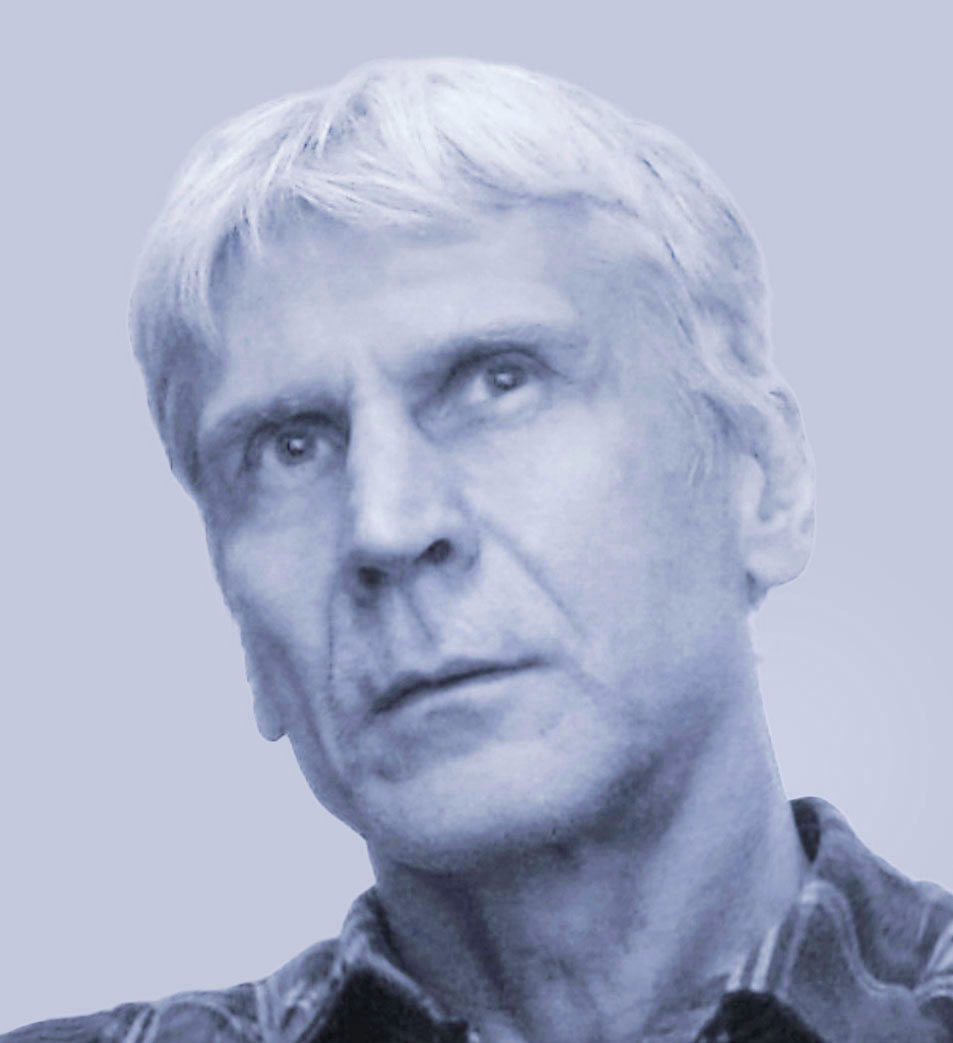
Holger Ullmann is an independent German researcher and systems analyst with over two decades of focused research in this field. As an autistic researcher (Asperger's), his approach leverages a highly focused, visual, and systemic capacity for pattern recognition.
This cognitive lens is perfectly suited for detecting structural isomorphies, revealing patterns that often remain hidden in the "blind spots" between specialized academic disciplines.
In many ways, this neurodivergent approach naturally aligns with the epistemological ideal described in the Epinomis: the necessity of looking beyond isolated fields of study to recognize the single, underlying structural bond that unifies them all.
Acknowledgments
Profound gratitude is owed to the rich tradition of the Tübingen School, most notably the foundational work of Konrad Gaiser, without whose philological groundwork this structural reconstruction would not have been possible.
Furthermore, my deepest appreciation goes to Prof. Dr. Vittorio Hösle. His profound insights in his seminal work "Platon interpretieren", coupled with his personal methodological advice to rigorously engage with the primary texts and the structural legacy of the early Academy, provided an invaluable academic compass for this research.
The Project: Upcoming Publications
Expanding the framework:
Forthcoming monographs applying the Platonic Symmetry Architecture
The results of this twenty-year research will be published in a series of monographs. The core system—the "Platonic Symmetry Architecture"—will be used as a key to decipher various historical and philosophical application areas.
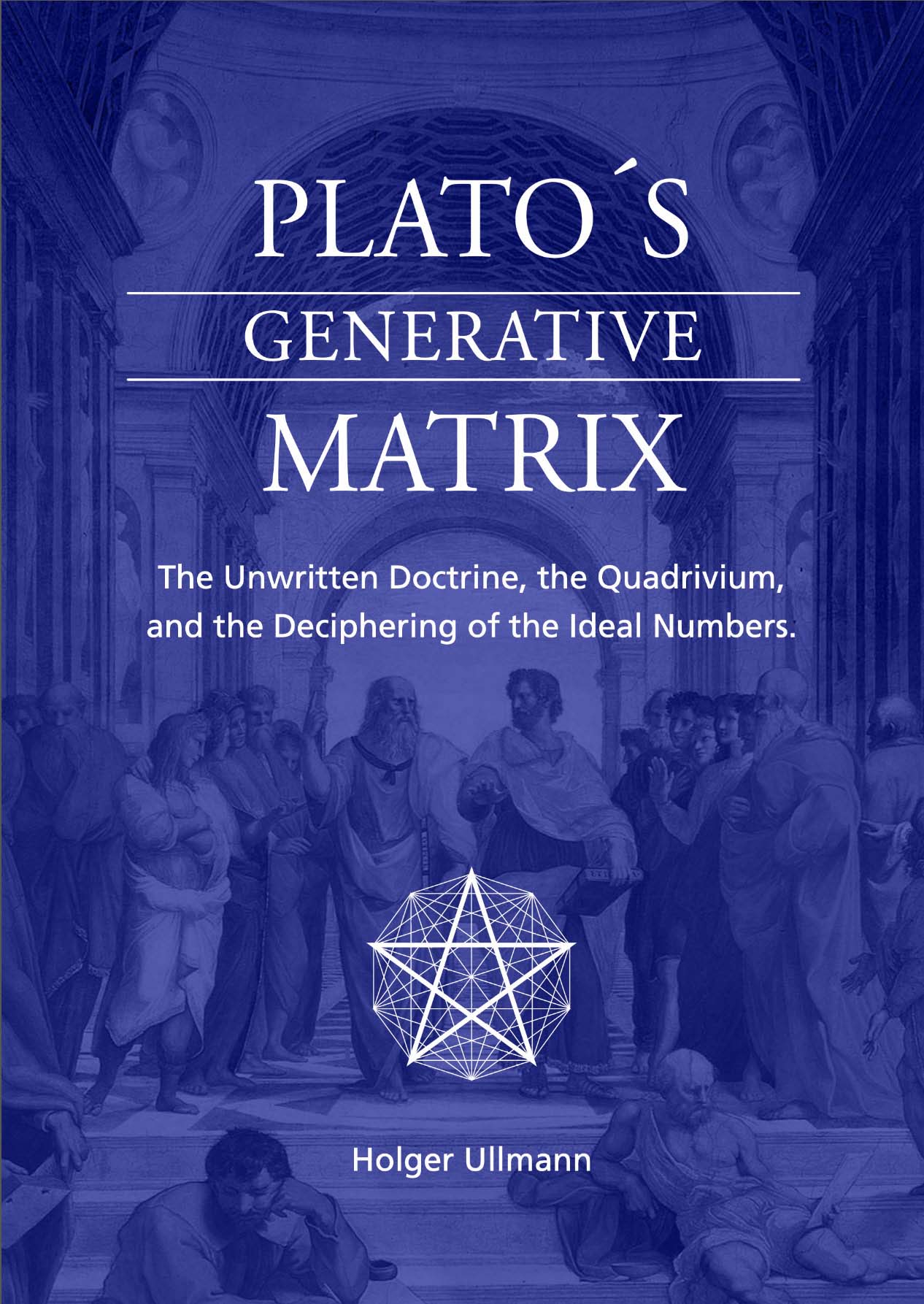
PLATO'S GENERATIVE MATRIX
The Unwritten Doctrine, the Quadrivium, and the Deciphering of the Ideal Numbers.
Status: Expected Release 2027
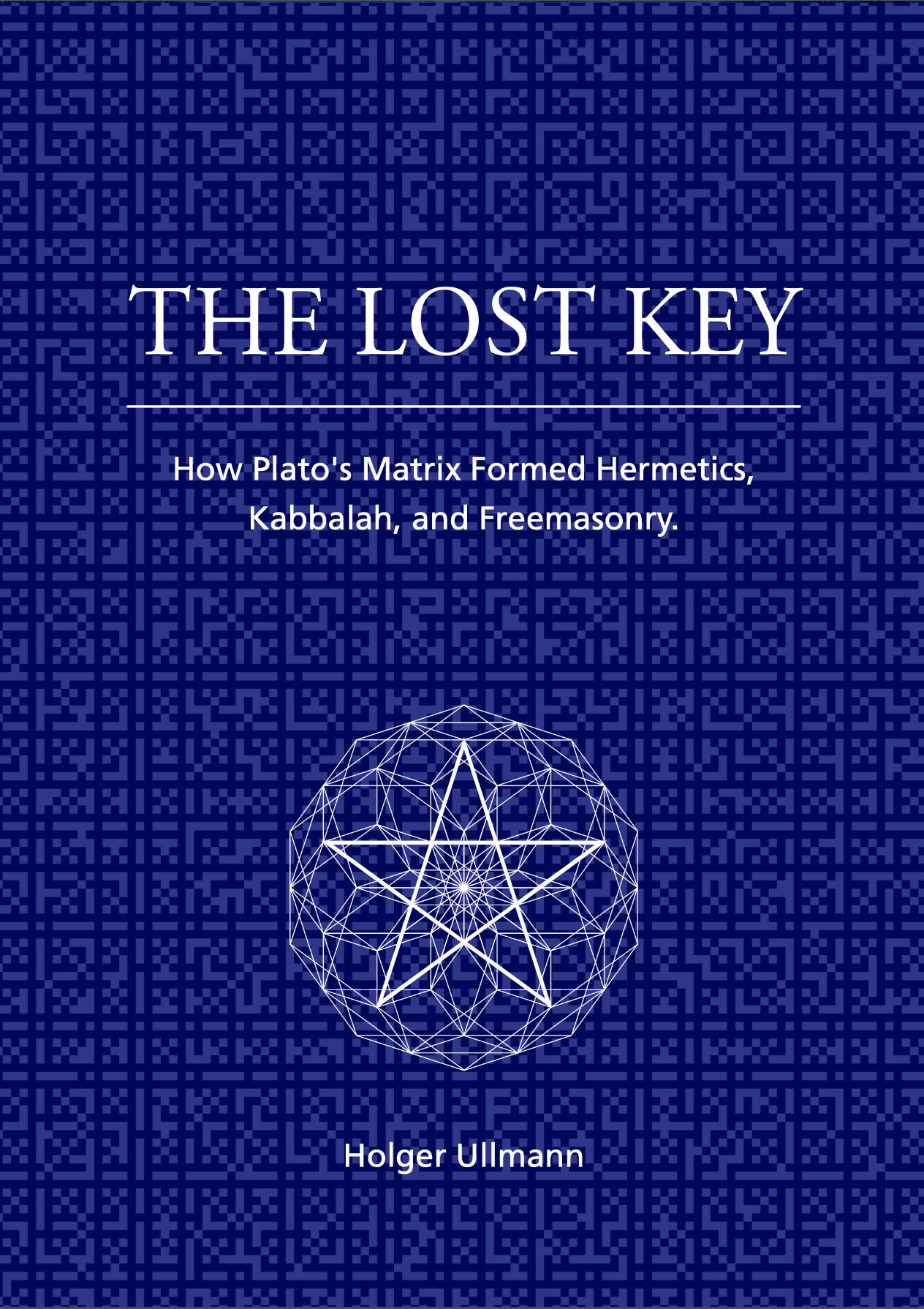
STRUCTURAL TRANSMISSIONS
Tracing the Platonic Matrix in Late Antique, Hermetic, and Kabbalistic Traditions.
Status: In Preparation
Contact & Legal Notice
Contact information and legal disclosure
CONTACT INFORMATION
Holger Ullmann
Independent Researcher
Email: mail [at] holger-ullmann.de
LEGAL NOTICE (IMPRESSUM)
**Angaben gemäß § 5 TMG:**
Holger Ullmann
Marielies-Schleicher-Str. 6 i
63743 Aschaffenburg
Germany
DISCLAIMER & PRIVACY
Disclaimer (Haftungsausschluss)
Die Inhalte dieser Seite wurden mit größter Sorgfalt erstellt. Für die Richtigkeit, Vollständigkeit und Aktualität der Inhalte wird keine Gewähr übernommen. Diese Webseite enthält ggf. Links zu externen wissenschaftlichen Publikationen oder Buchseiten. Für deren Inhalte sind ausschließlich die jeweiligen Betreiber verantwortlich. Zum Zeitpunkt der Verlinkung waren keine rechtswidrigen Inhalte erkennbar.
Privacy Policy (Datenschutz)
Auf dieser Webseite werden keine personenbezogenen Daten erhoben, gespeichert oder ausgewertet. Es werden keine Cookies gesetzt und keine Analysetools verwendet. Technische Zugriffsdaten (z. B. IP-Adresse, Zeitpunkt, Browsertyp) können vom Hostinganbieter kurzfristig verarbeitet werden, um die Funktionsfähigkeit zu gewährleisten.